Roofs rarely fail overnight. They tire, then struggle, then quietly give up where nobody looks. I have peeled back plenty of roofs around King’s Lynn and seen the same story play out in attics and loft voids: damp insulation, swollen chipboard, rusty nail points, and a thin film of frost that melts into a drip on the first mild day. The culprit is often not the tile or felt, but stale air that never leaves the roof space.
Ventilation is a small line on most quotes, a modest cost among bigger ticket items like tiles or membranes. Yet, if you ask experienced King’s Lynn Roofers who handle this climate year after year, they will tell you a simple truth. A roof that breathes outlasts one that doesn’t. Good ventilation keeps the roof structure drier, stabilizes temperatures, and helps the whole system perform as designed.
What roof ventilation actually does
Ventilation moves air through the roof space, flushing out moisture and excess heat. In practice, that means fresh air enters at low points, typically the eaves, and exits at high points like the ridge. The flow is driven by natural pressure differences, wind, and temperature.
Moisture migration is the big one in our region. Warm air holds water vapor. When that warm indoor air sneaks into a cold loft through ceiling penetrations, it cools and drops its moisture. That condensate ends up on the underside of sarking boards, rafters, nail tips, and sometimes the felt or breather membrane. If the air sits stagnant, moisture accumulates and becomes a regular wetting and drying cycle that timber does not enjoy.
Ventilation clears the damp air before it can do much harm. In summer, it also reduces heat build-up under dark tiles or sheets, which helps protect underlay and insulation from cooking over long spells.
Why King’s Lynn roofs feel the strain
This part of Norfolk gets a maritime climate with brisk easterlies, higher ambient humidity, and sudden swings between cold nights and sunny days. I have seen frost inside lofts on January mornings, then heard the tell-tale tick of droplets falling onto the plasterboard by noon after the sun warms the tiles. That freeze-thaw pattern is punishing on fixings and timbers.
Local building stock matters too. Many King’s Lynn homes combine older brickwork with later insulation upgrades. When you tighten a house for energy efficiency, you change the moisture balance. Less leakage through the fabric can trap more moisture inside unless the roof space has enough airflow to compensate. I often meet owners puzzled by new condensation that appeared after loft insulation was topped up. The insulation worked, the loft got colder, and ventilation didn’t keep pace.
The anatomy of a healthy airflow path
The best ventilation works quietly behind the scenes. You should not feel a gale in the loft or see daylight streaming through gaps. Instead, you want a steady wash of air that moves from eaves to ridge without dead zones.
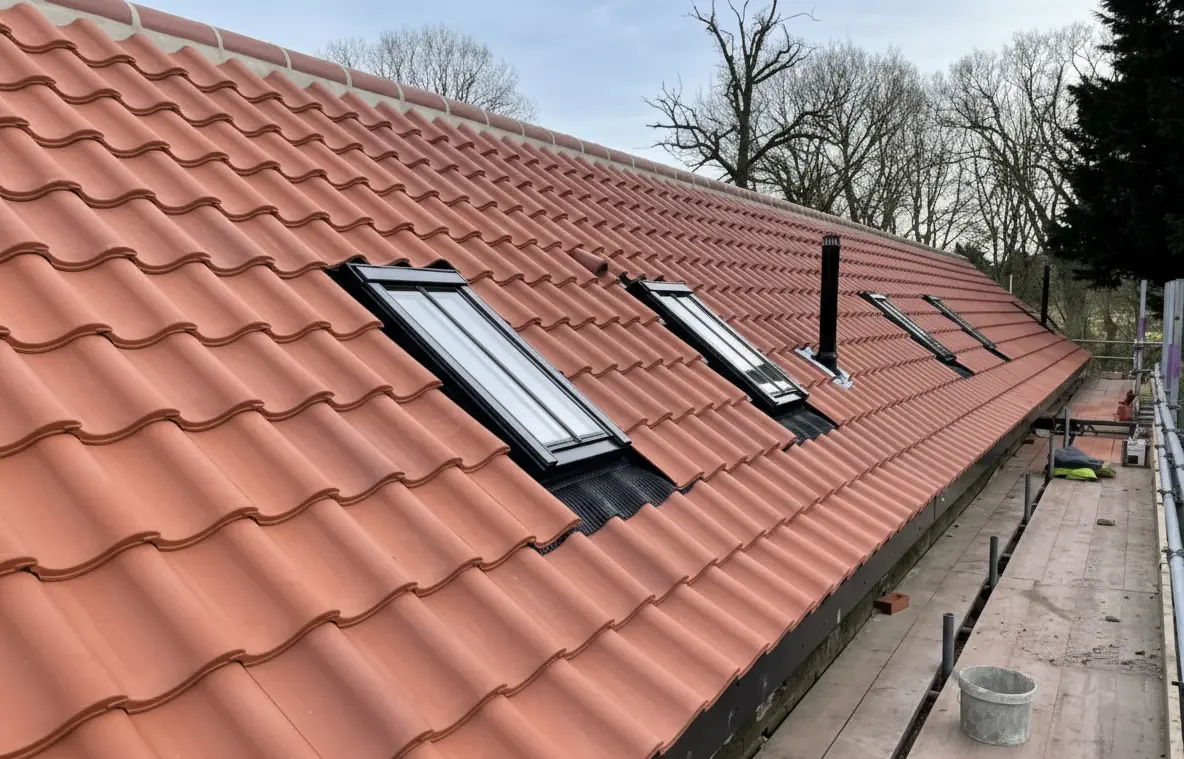
At the eaves, air should enter continuously or at frequent intervals. Felt support trays prevent sagging underlay from blocking the path. Over the insulation, baffles keep a clear chute so airflow doesn’t choke on thick quilt. The fresh air travels along the underside of the underlay or between rafters, gathers at the peak, then leaves through ridge vents or roof vents designed for extraction.
Modern breather membranes help by letting water vapor pass while repelling liquid water. They are not magic, though. They reduce the ventilation burden, but they do not eliminate it. I have opened up roofs with breathable underlay and found condensation stripes tracking along rafters simply because the eaves were stuffed and the ridge had nowhere to exhale.
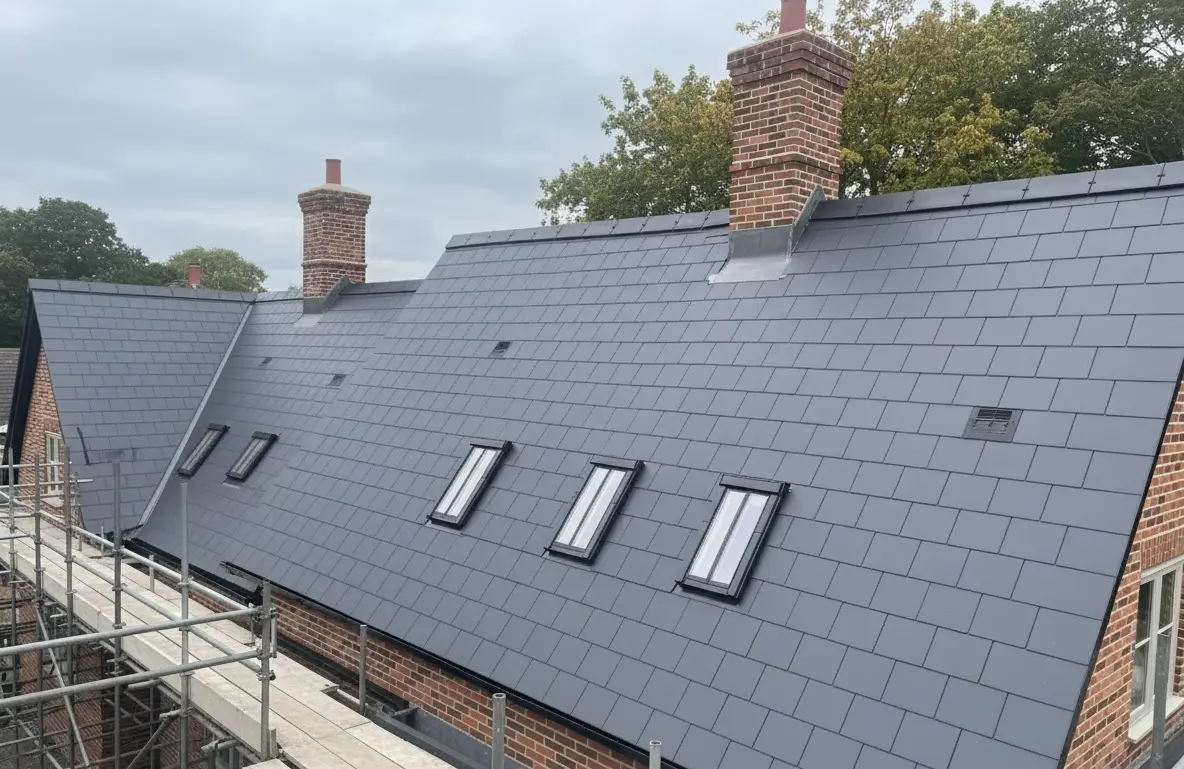
Signs your roof is struggling to breathe
I walk roofs and lofts with a short checklist in my head. The common symptoms are repeatable.
- Rusty nail points, blackened felt or membrane, damp insulation with matting or clumping, water stains on the back of sarking boards, a white salty bloom on mortar along ridge or hips, musty odour that spikes on warmer mid-mornings
If you see two or more of these, it usually means ventilation is weak or blocked. On cold nights, a torch against the underside of a membrane can reveal a spatter of micro-beads. In some lofts, frost outlines every nail head like stars. That can feel quaint in a photo, then you remember those droplets will fall back into the structure once they thaw.
Roof types around King’s Lynn and how ventilation differs
Not all roofs need the same approach. Tile, slate, metal, flat roofs, and conversions each have quirks that change the airflow strategy.
Pitched tile or slate roofs work best with continuous low-level intake and ridge-level exhaust. Tile vents can supplement if ridges cannot be vented. If there is a waterproof sarking board rather than a membrane, you may need higher ventilation rates because water vapor cannot diffuse through as readily. Older Norfolk cottages sometimes have no underlay at all, which means the cavity behind tiles breathes freely, but you still want controlled movement within the loft zone.
Warm lofts and rooms in roof have insulation at the rafters with a ventilated void above. Here, keeping a consistent 50 mm ventilation gap (check rafters and membrane specifics) becomes vital. Tricky junctions around dormers and valleys tend to starve the air path. I have cut clean slots and added low-profile vents near cheeks of dormers to restore flow.
Flat roofs demand a different logic. A cold roof with insulation at the ceiling needs cross ventilation beneath the deck. Many of these fail because the joist voids are not interconnected or the fascia trays were never cut back. On warm flat roofs, you rely on the integrity of the vapour control layer and the quality of the insulation, with ventilation either minimal or not required, depending on specification. Mistakes here show up as blisters and soft spots in the deck.
Metal roofs over outbuildings or modern extensions can overshoot temperatures quickly, then dump condensate when the night cools. You need generous ventilation or a carefully designed warm construction with a sound vapour barrier. I have watched ceiling boards beneath cool warehouses sweat in spring because warm indoor air hit a cold metal skin with no path to leave.
How much ventilation is enough
The right amount is shaped by roof pitch, span, insulation level, and whether the loft is cold or warm. As a rule of thumb for a cold pitched roof, think in terms of continuous eaves ventilation plus high-level ventilation to drive the stack effect. Continuous is better than spotty. For many domestic roofs, a continuous 10 mm opening at eaves combined with 5 mm at the ridge is a starting point, and 25 mm eaves is typical when there is no high-level outlet. Tile vents can substitute as needed, but a clean end-to-end path beats scattered vents nearly every time.
Breather membranes adjust the calculation. Some manufacturers allow reduced high-level venting when the membrane is truly breathable and laps are done right. In practice, if you see recurring condensation despite a membrane, increase the vent area rather than rely on datasheet minimums. Real houses have quirks that paper does not show.
Energy efficiency without inviting condensation
Insulation and airtightness save money, but they shift where moisture condenses. After a loft top-up, I like to revisit ventilation. Many problems start with blocked eaves where insulation burst past the joist line. Add eaves spacers and tidy the quilt. If you install downlights below, cap them with fire-rated covers and seal penetrations. Warm air leaking around lights is a surprisingly common moisture source.
Solar gain can overheat roof spaces in July. Ventilation softens the spike. While this does not make a dramatic dent in whole-house cooling numbers in our climate, it prolongs the life of felt and reduces resin bleed from timber. I have seen felt that becomes brittle ahead of schedule when the roofspace cooks for years.
Common mistakes I see on site
Shortcuts hide in the details. A few patterns repeat.
- Overstuffed eaves where insulation chokes the intake, ridge vents installed without matching baffles below to deliver air to them, tile vents placed randomly without a clear flow path from low to high, vapour control layers missing or torn behind bathrooms and kitchens, flat roofs with vent grilles that don’t connect between joist bays so only the end bays get any airflow
These are not expensive problems to avoid. They require time, a bit of additional material, and someone who cares about the bits you do not see.
Real examples from around town
A 1930s semi near Gaywood had a neat re-roof with breathable membrane and new tiles. The owners called after the first cold snap because the loft smelled musty. We found perfect membrane, good battening, and beautiful ridges, but no eaves ventilation. The underlay sagged slightly into the gutter, sealing the path. We added felt support trays, a continuous 10 mm soffit strip, and a vented ridge. The smell vanished, and the loft settled into a steady, dry equilibrium.
A bungalow in South Wootton had fresh 300 mm insulation and ongoing damp patches on the bedroom ceilings. The contractor had puffed the quilt right into the eaves. There was no airspace, and the bathroom fan duct leaked into the loft. We pulled back the quilt, installed rigid eaves baffles, sealed the duct with a proper roof terminal, and added two discreet tile vents near the hip where the ridge detail was tricky. The stains dried within weeks, and the thermal performance stayed excellent.
A flat roof over a rear extension near West Lynn kept blistering after summer. The structure was a cold roof with token vents at the fascia. Problem was, the joist voids dead-ended at the party wall. Air moved in, then went nowhere. We cut discreet through-voids between joists and added high-level louvres at the opposite parapet. The roof calmed down over the next season, with infrared checks showing a far more uniform temperature across the deck.
Materials and products that make a difference
Modern vented ridges are leagues better than older ad-hoc gaps. They shed wind-driven rain well and deliver consistent outlet area. Eaves ventilation systems that combine insect mesh, soffit strips, and Visit Here felt support trays do three jobs at once: keep critters out, hold the underlay away from the gutter, and maintain a predictable opening.
Breather membranes vary. A membrane with a high vapour resistance will not forgive careless detailing. If I see a loft with borderline ventilation, I steer clients toward membranes with verified breathability and careful lap sealing. For older properties without sarking boards, I pair that with just a bit more high-level ventilation than the datasheet minimum.
Tile and slate vents, used sparingly, can solve symmetrical problems on hips or dormers where a continuous ridge is interrupted. The key is to think in pairs: low and high in the same rafter run so air can travel, not stagnate.
What a good roofer does differently
There is craftsmanship in airflow. A seasoned roofer at survey will look for light in the eaves, sight along the rafters for blocked paths, and feel for chill or damp in the loft air. On installation, they will keep the underlay taut at the eaves, set the trays correctly, and align vents so the path is unbroken. After re-roofing, the best crews go back into the loft, not just admire the tiles from the ground. They check the ridge from below, test the bathroom duct for airflow, and confirm that insulation has not slumped into the baffles.
When you speak with King’s Lynn Roofers, ask how they intend to ventilate your specific roof, not just whether they will. Good answers describe the path, the sizes, the products, and how they will stop insulation from blocking the intake. If the plan changes on site, they should be able to explain the trade-offs confidently.
The cost of not ventilating
People often think only in terms of leaks. Condensation is a slower leak you cannot see. The damage looks like:
- Softened or delaminating sarking boards, mould on the back of plasterboard, corrosion on metal fixings that can snap later, sagging insulation that loses performance as it clumps, stained ceilings that reappear after repainting
I have replaced ridge lines where mortar failed early because persistent damp loosened the bond from below. Timber decay takes time, but when it goes, repairs jump from a small ventilation upgrade to partial re-roofing with timber replacement. The cost difference is not kind.
Coordinating ventilation with other roof elements
Ventilation does not live in isolation. It ties into fascias, gutters, and roofline details. If the gutter sits high, the underlay can curl into it, blocking the path. If the soffit is sealed tight and there is no built-in vent strip, the air has nowhere to enter. When fitting new gutters, I like to confirm the underlay path and keep a clear drip into the gutter without pinching the membrane.
Roof windows bring heat and moisture into the equation. Kitchens and bathrooms vented through the loft should terminate outside with a proper roof terminal, not just dump into the roof space. Satellite cables, alarm wires, and solar conduit can breach the airtightness layer. A small bead of sealant around penetrations and a tidy grommet can prevent a surprising amount of warm air from escaping into the loft.
Seasonal checks that pay off
A roof breathes differently in January and July. A quick seasonal look keeps you ahead of trouble. After a cold spell, take a safe peek into the loft mid-morning on a clear day. If you see widespread droplets on the membrane, something needs attention. In midsummer, feel the loft air at dusk. Heavy, stagnant heat suggests the outlets are undersized or obstructed.
If you are hiring a roofer in King’s Lynn, ask for a follow-up visit after the first winter. That is when the truth shows. Adjustments at that stage might be as simple as adding two tile vents near a dead corner or pulling back insulation from a stubborn eave.
Practical steps if you suspect a ventilation problem
- Check the eaves from the loft for visible daylight, and confirm insulation is not pushed into the soffit, feel for draught at the ridge area or through known ridge vents, look for rust bloom on nail points and damp patches on the underlay, verify that bathroom and kitchen extract ducts terminate at proper roof outlets, speak with a roofer who will measure vent areas, not just eyeball the ridge and leave
Most homeowners can do the first pass safely with a torch and care on the joists. Anything beyond that belongs to a professional. Roof work at the eaves and ridge is awkward without the right kit, and it is easy to introduce new problems when you only meant to fix one.
The role of a local roofer
Working in one region teaches you the patterns. In King’s Lynn, the winds, the damp mornings from The Wash, and the mix of older and mid-century housing create recognizable ventilation challenges. A local roofer has already seen the mold stripe that runs along a valley rafter where the airflow pinches, or the way a hip roof starves the end bays. They know which vented ridge systems hold up to our gusty days and which soffit vent designs clog with spiders and grit inside a year.
If you search roofer kings lynn, do not be shy about asking for photographs of the eaves and ridge detailing on recent jobs. You learn a lot from the way someone finishes hidden edges. The best King’s Lynn Roofers are proud of the invisible work, not just the visible tiles.
When re-roofing offers the right opportunity
Ventilation upgrades are easiest during a re-roof. With the covering off, you can correct sags in underlay, run continuous vented ridge systems, and fit trays properly at every rafter. If the budget allows, it is the moment to rethink the entire airflow path, bring ducts to proper terminals, and standardize materials. I encourage clients to consider the lifetime cost. Spending a small percentage extra on a robust ventilation design during a re-roof pays back by preventing structural repairs later.
For partial work or spot repairs, you can still improve things. Targeted tile vents placed low and high can revive a stagnant area. Soffit vents and careful insulation management along the eaves often solve recurring condensation in ordinary semis. Just remember that piecemeal fixes should serve a clear path. Air wants a beginning and an end.
Breathable is not the same as ventilated
It bears saying plainly. A breathable membrane is a good tool, not a cure-all. It allows vapor diffusion, but diffusion is slow compared to moving air. If moist air accumulates faster than it can diffuse, you will still see condensation. Pair membranes with credible airflow, especially where there are concentrated moisture sources like bathrooms, kitchens, or occupied loft rooms.
Ventilation and warranties
Manufacturers often tie warranties to installation that follows their ventilation guidance. If something fails and you have no ridge outlet or the eaves are obstructed, claims can get awkward. Keep the paperwork and photographs from your roofer. Document the vent areas and locations. It rarely matters day to day, but when it does, you will be glad you have it.
What I recommend on most domestic pitched roofs here
For a typical cold loft with tiles or slates in King’s Lynn, a dependable setup looks like this. Continuous eaves ventilation using a 10 to 25 mm system depending on roof build-up, felt support trays to stop underlay sag, baffles above insulation at every rafter line, a continuous dry vented ridge if possible, or a balanced set of high-level tile vents when ridges are interrupted, proper termination for all extract fans through dedicated roof terminals, and a quick final inspection from the loft after completion to verify a clear daylight line and a gentle draft near the ridge.
That approach is not fancy. It is reliable and repeatable, and it lowers the risk of those subtle, slow failures that cost more than anyone expects.
Final thoughts from the loft
Roofs are often judged from the pavement, but the attic tells the truth. Stand there quietly for a minute. You should feel a faint freshness even on a still day, not a wet chill or stuffy heat. The timbers should look consistent in colour, the membrane clear of beads, the insulation dry and fluffy.
If your roof hesitates on those counts, speak with a local professional. The right airflow is not a luxury. It is a core part of the roof’s health, especially in a place like King’s Lynn where the weather lingers and the overnight damp likes to hang around. Get the ventilation right, and everything else in the roof system has an easier life.